American Revolution teaching resources, testimonials, events, and more
If you're having trouble viewing this email, you cansee it online.
Coordinated by Rethinking Schools and Teaching for Change.
Stories the Freedom Truck Leaves Out
As the nation approaches the 250th anniversary of the Declaration of Independence, PragerU is encouraging students to celebrate the American Revolution as a story of expanding freedom. Its videos acknowledge the founders’ imperfections, but insist that when we ”zoom out, they were pushing the world toward freedom.”
The problem is not that they zoom out — it’s thatthey don’t zoom out far enough.
Their version leaves out the millions of people held in bondage, the dispossession of Native nations, and the reality that most people were excluded from the very freedom being celebrated.
What PragerU calls “zooming out” is really narrowing the lens — focusing only on those who benefited from the Revolution while leaving everyone else out of the picture. When only the powerful are allowed into the story, history stops being an exploration of truth and becomes a distorted celebration of power.
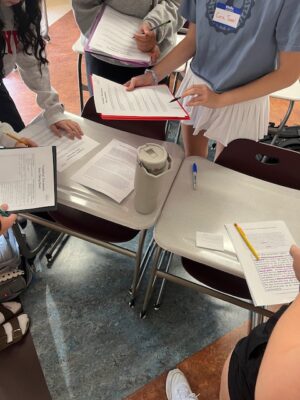
Read how teachers are using our lesson, “Founding” Documents We Don’t Learn About, in their classrooms. Thanks to donations from educators and supporters like you, this lesson is free. Help keep all of our lessons and classes freely available by donating today.
“Founding” Documents We Don’t Learn Aboutis the lesson I’ve been looking for. It generated great conversations as kids found connections of freedom within — and between — different groups and people.
Many of them noticed the words “freedom” and “liberty” used from their person’s perspective, and it was an awesome springboard into discussion of the Declaration of Independence. Thank you for putting together these rich primary sources!
— Sara Ziemnik, high school social studies teacher, Bay Village, Ohio
I highly recommend “Founding” Documents We Don’t Learn Aboutif you want to move beyond the typical founding documents, dive into the perspectives of those who were critical of the ideals of the founding and American “Revolution,” and engage your students!
— Deana Forbes, high school social studies teacher, Lilburn, Georgia
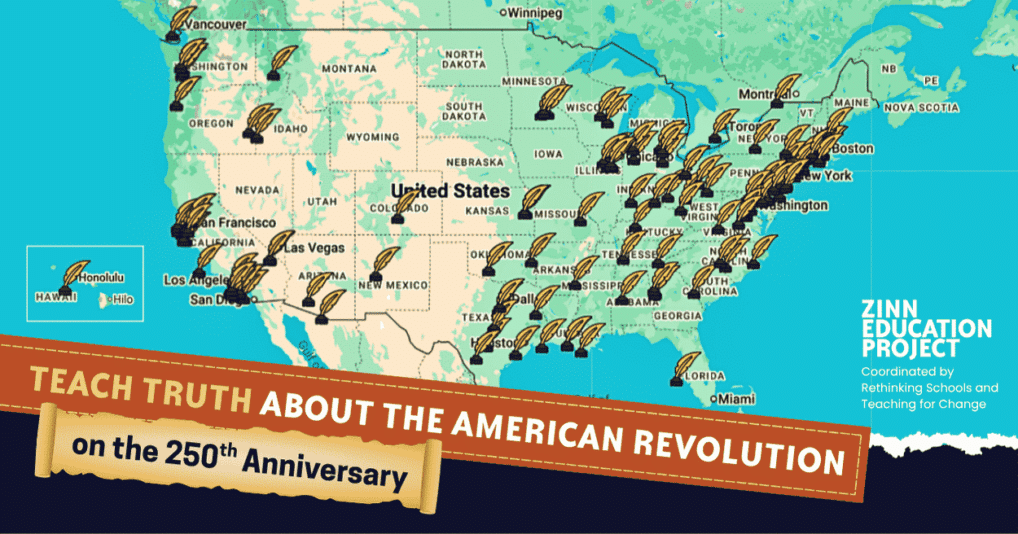
Teach Truth. Be Counted.
Let’s make visible the fact that educators everywhere are teaching truthfully about the American Revolution.
We add quills to mark the cities where teachers are participating. Help us fill the map with participation from every state and territory. (Your name stays private.) Plus, access free lessons, reflection questions, and more.
How do myths about the American Revolution shape our thinking about today?
Answer: Founding myths hide how inequality was built into U.S. institutions, making today’s injustices seem accidental rather than systemic . . . Continue reading
Isn’t it unfair to judge the American Revolution and the founders by today’s moral standards?
Answer: No.Critiques of slavery and inequality were well known at the time of the Revolution, and evaluating past decisions is essential to learning from history . . . Continue reading
Isn’t teaching students to question the American Revolution unpatriotic?
Answer: Teaching students to question and investigate the contradictions of the American Revolution is a core democratic practice that equips young people to understand history, assess power, and participate in creating a more just society . . . Continue reading
First America, a six-episode narrative podcast and essay series written and reported by Rebecca Nagle, Cherokee journalist and creator of This Land, features leading Native scholars and historians including Ned Blackhawk, Maggie Blackhawk, Phil Deloria, and Nick Estes.
The podcast unveils how the founders’ treatment of Indigenous nations — and their resistance — shaped U.S. democracy.
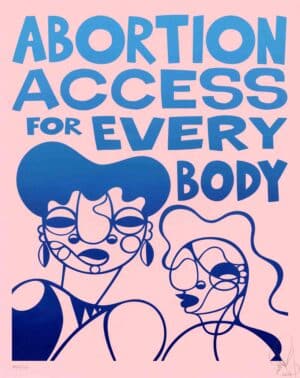
On June 24, 2022, the U.S. Supreme Court overturned Roe v. Wade in Dobbs v. Jackson Women’s Health Organization, ending the federal constitutional right to abortion.
Check out these events hosted by the Zinn Education Project, our coordinating organizations — Rethinking Schools and Teaching for Change — and our colleagues. All events are online unless noted otherwise.
On Wednesday, June 24, join Science Teaching for Social Justice editors and contributors for a Rethinking Schools book launch and celebration! Science Teaching for Social Justice shares stories of educators and students who explore how social and political systems shape science.
From preschool to graduate studies and across disciplines, this new book contains lessons that empower students to use science as a tool for equity and justice.
A march commemorating the 1794 Treaty of Canandaigua in New York. Photo by Alex Hamer.
On July 21–22, join the Smithsonian’s National Museum of the American Indian education initiative Native Knowledge 360° and featured speakers for an online look at the newest classroom-ready resource for middle school teachers and students — American Revolution: Haudenosaunee Perseverance, which explores how the Haudenosaunee Confederacy persevered during and after the American Revolution. Read more and register.
Call for Proposals
The DCAESJ Social Justice Curriculum Fair is accepting workshop proposals through Monday, August 3. Proposals are invited from educators focusing on various social justice topics and themes. Register and submit your proposal.
Teachers are under attack for teaching truthfully about U.S. history. Please donate so we can continue to offer free people’s history lessons and resources, and defend teachers’ right to use them.


.JPG)



.png)
.png)