At the same time, climate change is being scrubbed from curricula. In Florida, for instance, publishers have removed phrases like “polluting coal-burning power plants” and replaced “climate change” with “changes in the environment.”
To counter these false narratives, educators can help students approach climate change through honest inquiry and a more accurate understanding of our shared — and fragile — reality.
Climate Weekbegins on September 20th. This is a moment to break the silence in classrooms. Be a climate truth teller. Help students study the crisis clearly, understand its causes, and imagine how to organize for a more sustainable future.
Explore some of our many resources to teach about climate justice during Climate Week, and all year.
During The Climate Crisis Trial, students who typically have a hard time engaging with material were fully present, showing more interest than I have seen with any other resources.
—Annie Radigan, high school science teacher, Waltham, Massachusetts
In thistrial role play, students represent different “defendants,” from fossil fuel companies to governments, consumers, and the global capitalist system. All are charged with causing the climate crisis.
As they debate responsibility, participants explore interconnected factors and consider what justice might look like.
This lesson opens the door to conversations about capitalism, mass production, environmental responsibility, and what exactly drives this type of decision making in the real world. This is a lesson that I have and will continue to use every school year!
— Taylor Newport, high school history teacher, South Bend, Indiana
In The Thingamabob Game, groups of students represent competing manufacturers of “thingamabobs” — goods that, as in the real world, require natural resources to produce and whose production creates greenhouse gases, especially carbon dioxide.
The lesson explores how our economic system that puts financial profit above all else is incompatible with climate stability and environmental responsibility.
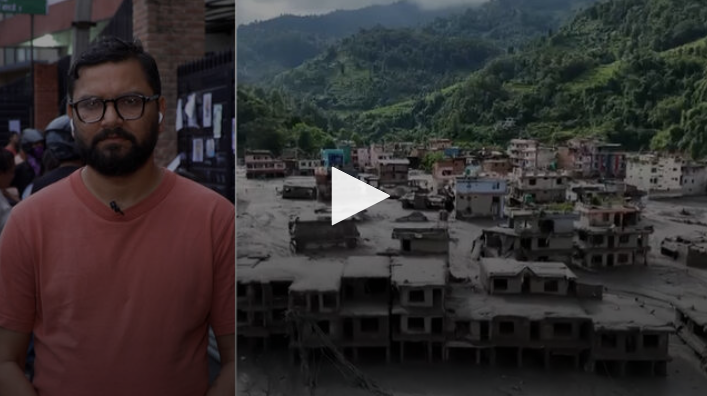
In this Democracy Now! interview, climate and public policy specialist Sunil Acharya discusses how the deadly glacial floods in Nepal are the result of delayed global action to deal with climate change.
Acharya explains,
The cause of this flooding, scientists have now started to tell, was because a huge ice mass fell off, and that triggered the flooding. It carried a huge amount of water, with rocks and debris along the way, washing away hundreds of villages, bridges, roads, and hydropower stations.
Check out what the Teaching for Black Lives study groups have been up to during the previous school year.
Applications are now open to host a Teaching for Black Lives study group in your school community during the 2026–2027 school year. Learn more and apply today.
On Saturday, September 26, join the 10th annual Native Knowledge 360° (NK360°) Teach-In. This event will bring together hundreds of teachers from across the country to enlighten and inform teaching about American Indians.
Through interactive workshops, educators will explore K–12 lessons centering Native voices and histories. Participants will learn how to bring the museum’s exhibitions and resources into their teaching.Learn more and register.
TheTeach the Black Freedom Struggleonline series combines live access to leading people’s historians, structured reflection in small groups, and an ongoing national community committed to truth and historical justice.
Join educators, students, and community members committed to teaching truth and building a more just world. ASL interpretation and professional development certificates provided. Learn more and register.
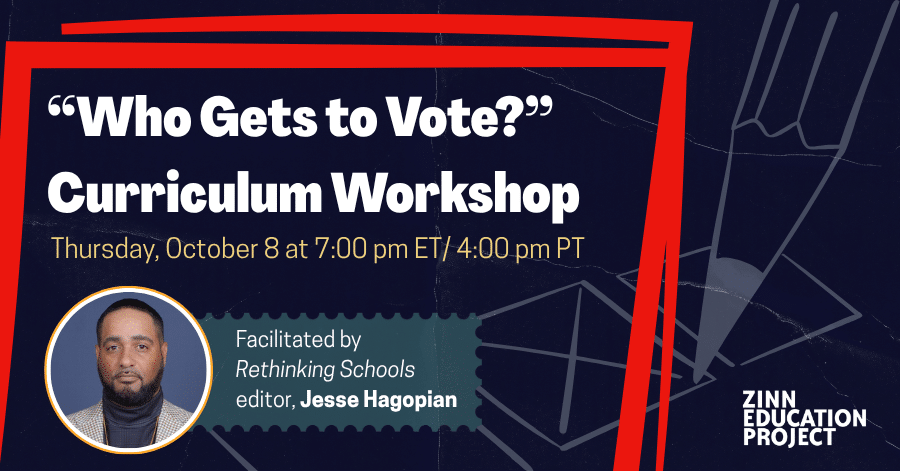
On Thursday, October 8, join the “Who Gets to Vote?” curriculum workshop introducing educators to a voting rights mixer role play that includes people with firsthand experience having their voting rights granted or denied. Participants will have an opportunity to meet in groups with other social justice teachers from across the country to discuss ways to address this topic in their own teaching. Learn more and register.
On Saturday, October 17th, attend the 19th Annual Northwest Teaching for Social Justice Conference — co-sponsored by Rethinking Schools — at Lindbergh High School in Renton, Washington (near Seattle).
Workshop leaders include Rethinking Schools editors Wayne Au, Linda Christensen, Grace Cornell Gonzales, and Ursula Wolfe-Rocca, and Prentiss Charney Fellows Julia Kirkpatrick and Suzanna Kassouf. Learn more and register.
Teachers are under attack for teaching truthfully about U.S. history. Please donate so we can continue to offer free people’s history lessons and resources, and defend teachers’ right to use them.



.gif)

.png)

(1).png)