If you're having trouble viewing this email, you cansee it online.
Teach Against Fascism
Challenge Misinformation
The airwaves are full of inflammatory rhetoric about immigrants to justify mass deportations. That’s one reason why we must teach truthfully.
Despite massive storms and extreme weather, the media largely ignores the climate crisis. Racist, homophobic, Islamophobic, and antisemitic rhetoric are on the rise.
While news outlets are shrinking and often unreliable, and disinformation proliferates on social media, school is where students can learn to think critically and read stories from history that shed light on today. Students can become innoculated against misinformation.
That is why the right censors instruction with book bans and anti-history education laws.
In How Fascism Works: The Politics of Us and Them, Jason Stanley said, "In antidemocratic systems, the function of education is to produce obedient citizens."
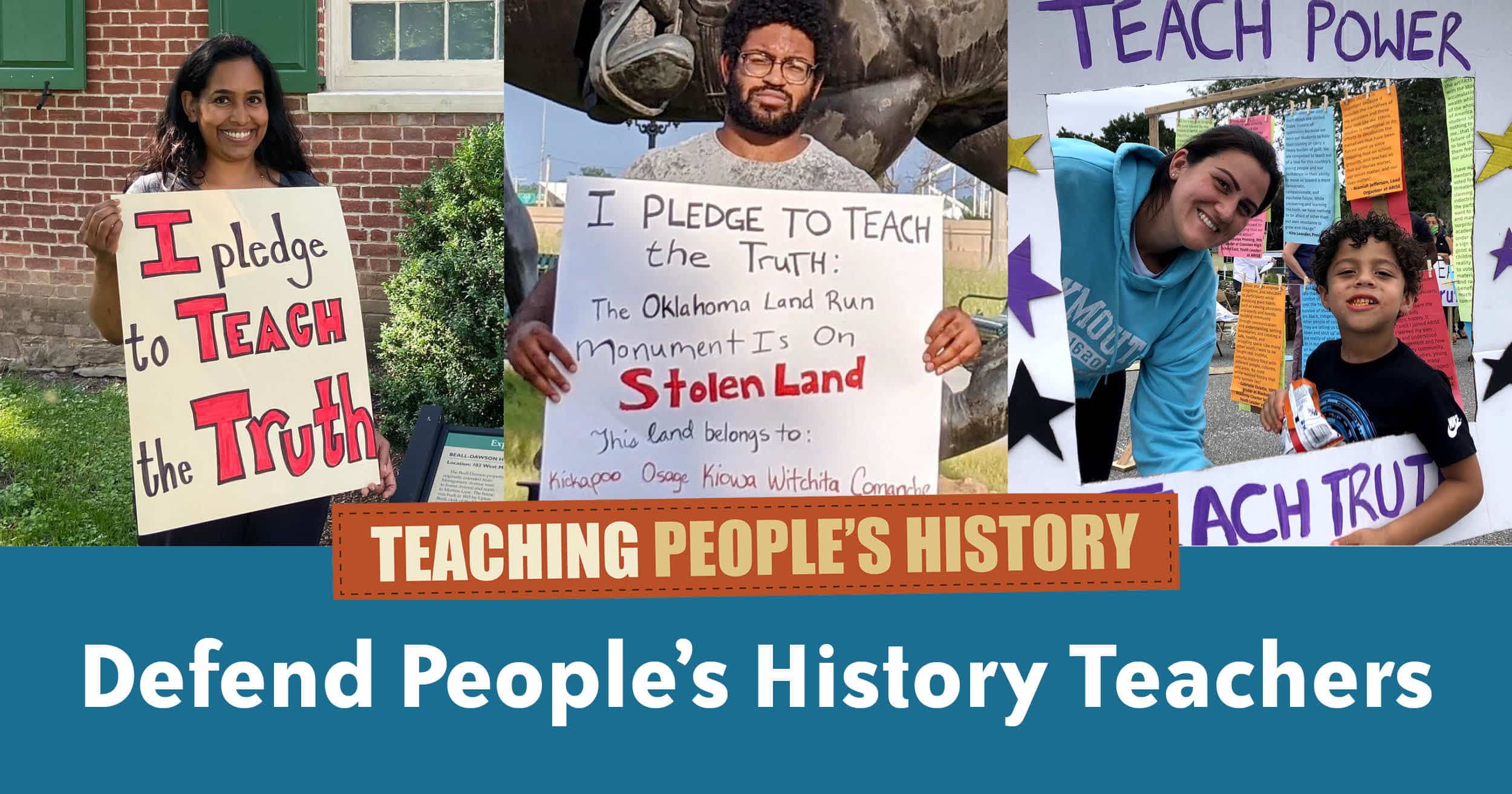
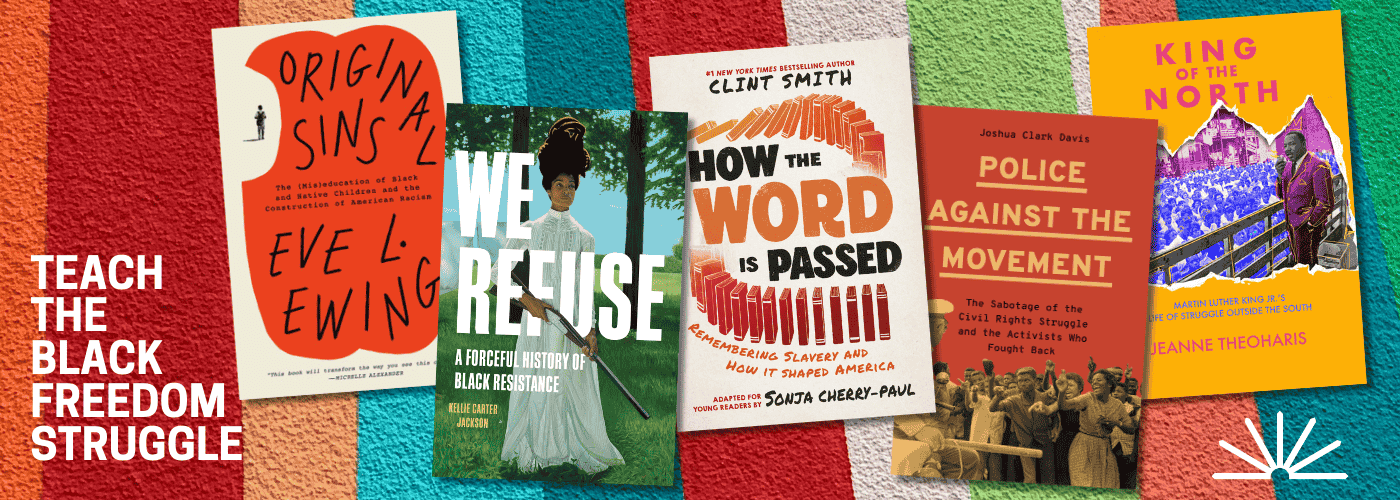
Our goal is the opposite. We offer lessons to teach truthfully, outside the textbook — on immigration, climate, labor solidarity, and more. Our lessons encourage students to ask questions, to think critically, and to ask who loses and who benefits from policies in history and today.
We rely on your donations so we can continue to offer all our lessons for free and defend teachers’ right to use them.
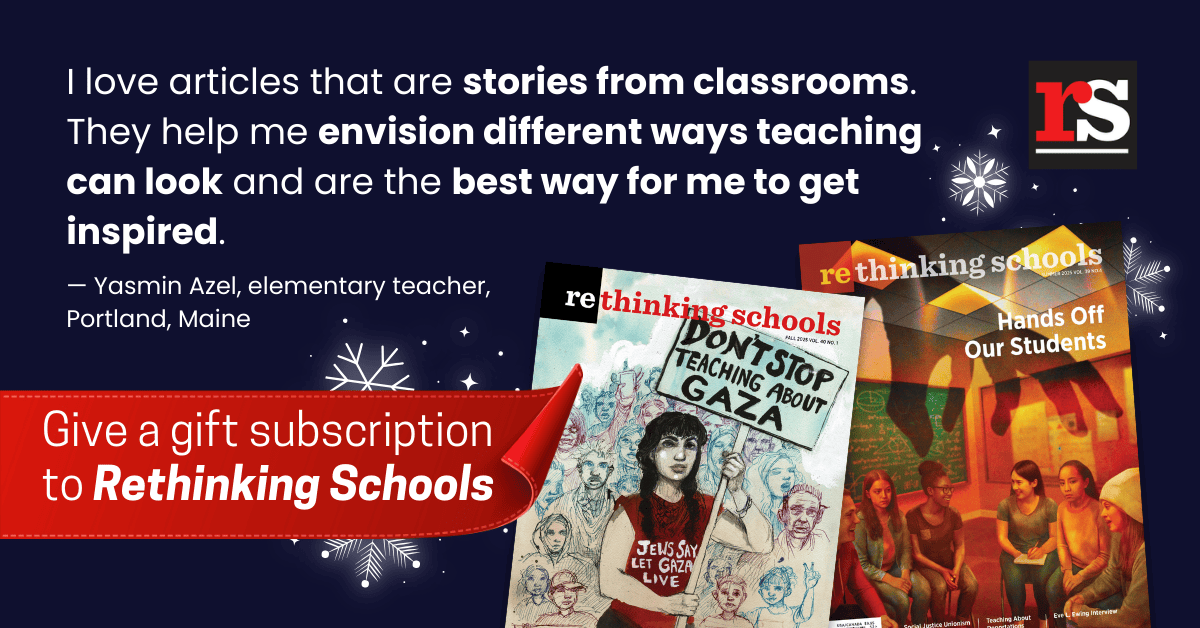
Give the gift of inspiration, four times a year. Each Rethinking Schools issue is full of teaching ideas and stories for pre-K–12 educators, librarians, and teacher educators. Subscribe now for a friend, family member, or yourself.
Add these events, hosted by the Zinn Education Project and our colleagues, to your 2026 calendar. Online unless noted otherwise.
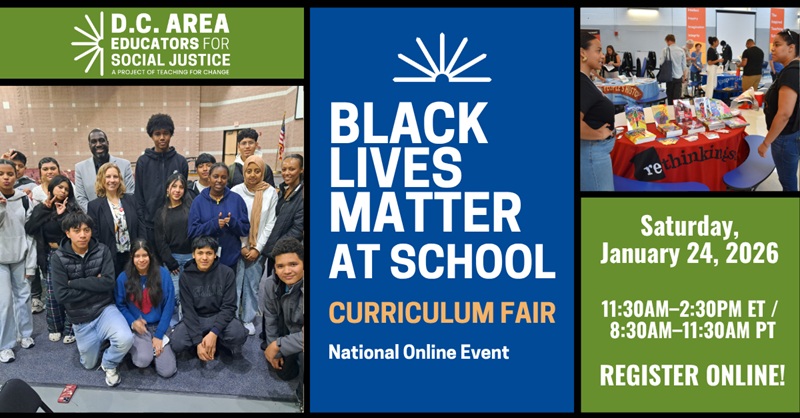
2026 Black Lives Matter at School Curriculum Fair, January 24. Workshops include: "Archives in Class: Teaching with the Emergency Committee on the Transportation Crisis Records" and "Justice in Action: Equipping Students to Reimagine Democracy."
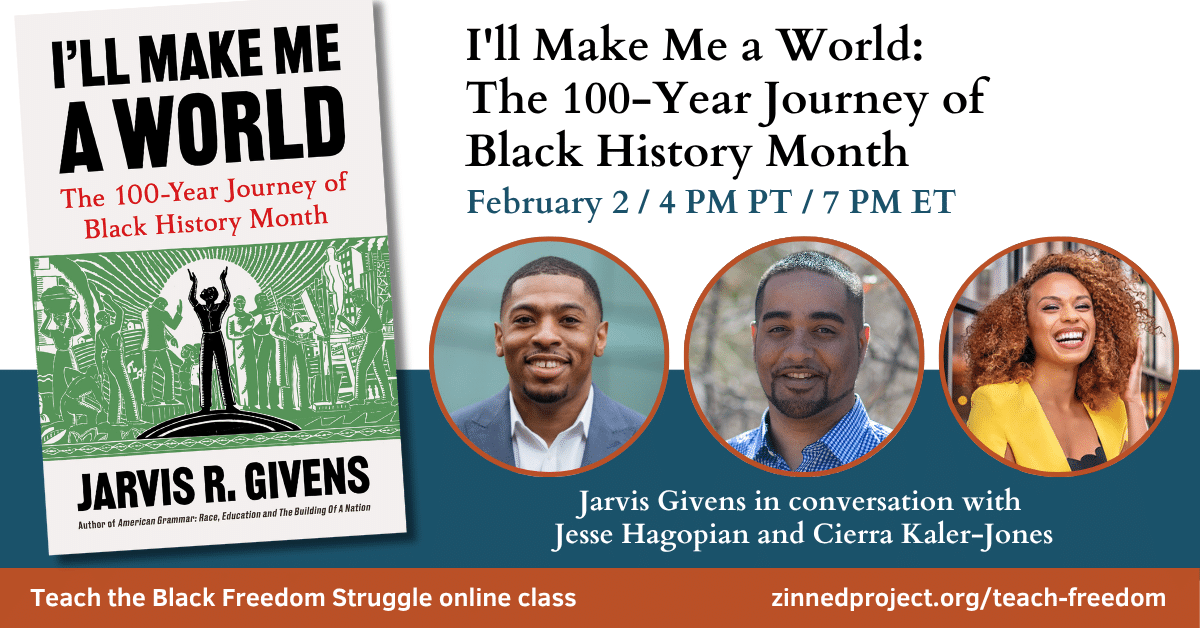
I’ll Make Me a World: The 100-Year Journey of Black History Month with Jarvis Givens, February 2. Drawing on archival research, personal stories involving family and students, and especially the wisdom of Black educators, Givens recovers the legacy of Carter G. Woodson and many others who envisioned Black history as a liberatory force — knowledge that shapes who we are, how we resist, and what we dream.
The annualNative Knowledge 360° Teach-In, hosted by the Smithsonian’s National Museum of the American Indian in collaboration with Teaching for Change on March 14, is an online opportunity for educators to access classroom resources from NMAI’s Native Knowledge 360° education portal, the Zinn Education Project, and more.