If you're having trouble viewing this email, you cansee it online.
Martin Luther King Jr.
On Police Brutality and Militarism
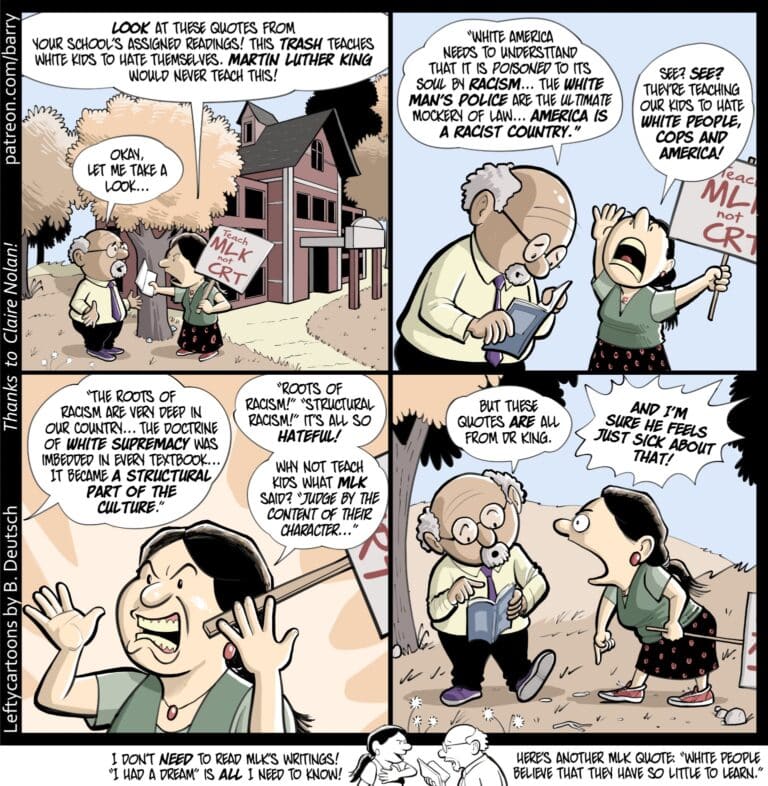
The right wing twists Dr. Martin Luther King Jr.’s words to attack anti-racist education and protests, focusing almost exclusively on MLK’s “I have a dream” declaration.
But Dr. King was a radical — in the most profound sense. He did not mince words about U.S. racism: “The doctrine of white supremacy was imbedded in every textbook and preached in practically every pulpit. It became a structural part of the culture.”
King critiqued the role of the U.S. military in Viet Nam and police brutality in the South and North of the United States. Referring to Watts, he said,
As the nation trembled with outrage at police brutality in the South, police misconduct in the North was rationalized, tolerated, and usually denied.
In advance of the holiday weekend, take a moment to read King in context, including his thoughts on Reconstruction, war, nuclear weapons, and police brutality.
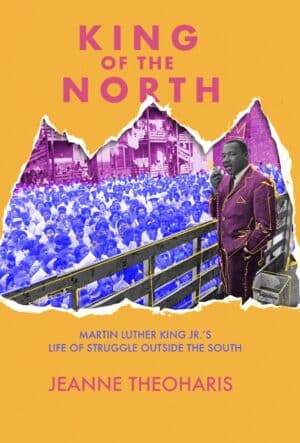
King of the North by Jeanne Theoharis fundamentally reshapes how we understand Martin Luther King Jr.’s politics and partnerships. Crucially, the book illuminates King’s sharp critique of liberalism.
This book not only reclaims King’s fierce critiques of Northern racism, structural economic injustice, and the violence of U.S. militarism — it also spotlights the role of Coretta Scott King as a visionary in her own right who shaped King’s radical commitments and anti-imperialist politics.
High school teacher Jessica Lovaas adapted a chapter of King of the North for her students and wrote discussion questions. The chapter describes King’s activism in New York on labor rights, police brutality, housing, and education. We posted the text and questions for free download, along with an activity by Jeanne Theoharis. Students compare a New York Times editorial critical of the 1964 New York City school boycott with a response by Dr. King in the Amsterdam News, where he argues that the boycott was essential. Students can identify parallels with the mainstream press and politicians’ responses to protests today.
Help us send the book to schools. Select the King of the North campaign when you donate. We’ll send you a report on the impact of your support. Donors of $100 or more can receive a copy of the book in appreciation.
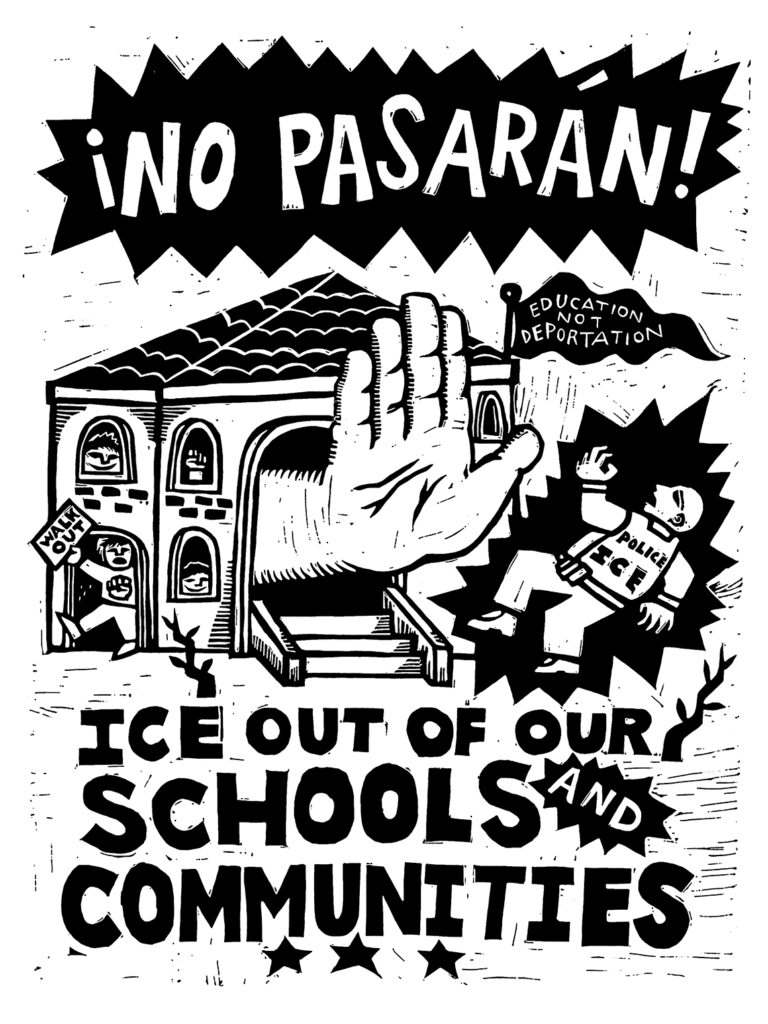
A recent invention born from fear, not necessity, it was created in 2003 amid the post-9/11 “War on Terror,” fusing counterterrorism with immigration control and recasting migration as a security threat, families seeking refuge as enemies of the state.
For more than two centuries, the United States functioned without this agency, proving it is neither inevitable nor indispensable.
ICE hides its cruelty behind recycled myths about immigrants and wears a mask of legality. Let’s expose the lies and pull off its mask.
From the classroom to the street, we need to defend our students and together learn the most effective ways to kick ICE out of our schools and communities.
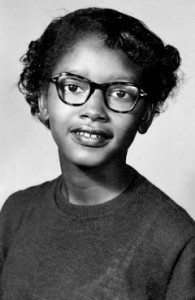
I could not move, because history had me glued to the seat. . . It felt like Sojourner Truth’s hands were pushing me down on one shoulder and Harriet Tubman’s hands were pushing me down on another shoulder, and I could not move. — Claudette Colvin on Democracy Now!
At age 15, on March 2, 1955, in Montgomery, Alabama, Claudette Colvin refused to give up her seat to a white woman.
Colvin was motivated by what she had been learning in school about African American history and the U.S. Constitution. Note that this action took place just days after Black History Month. She was also responding to the wrongful arrest (and eventual execution) of her schoolmate, Jeremiah Reeves.
I’ll Make Me a World: The 100-Year Journey of Black History Month with Jarvis Givens, February 2. Drawing on archival research, personal stories involving family and students, and especially the wisdom of Black educators, Givens recovers the legacy of Carter G. Woodson and many others who envisioned Black history as a liberatory force — knowledge that shapes who we are, how we resist, and what we dream.
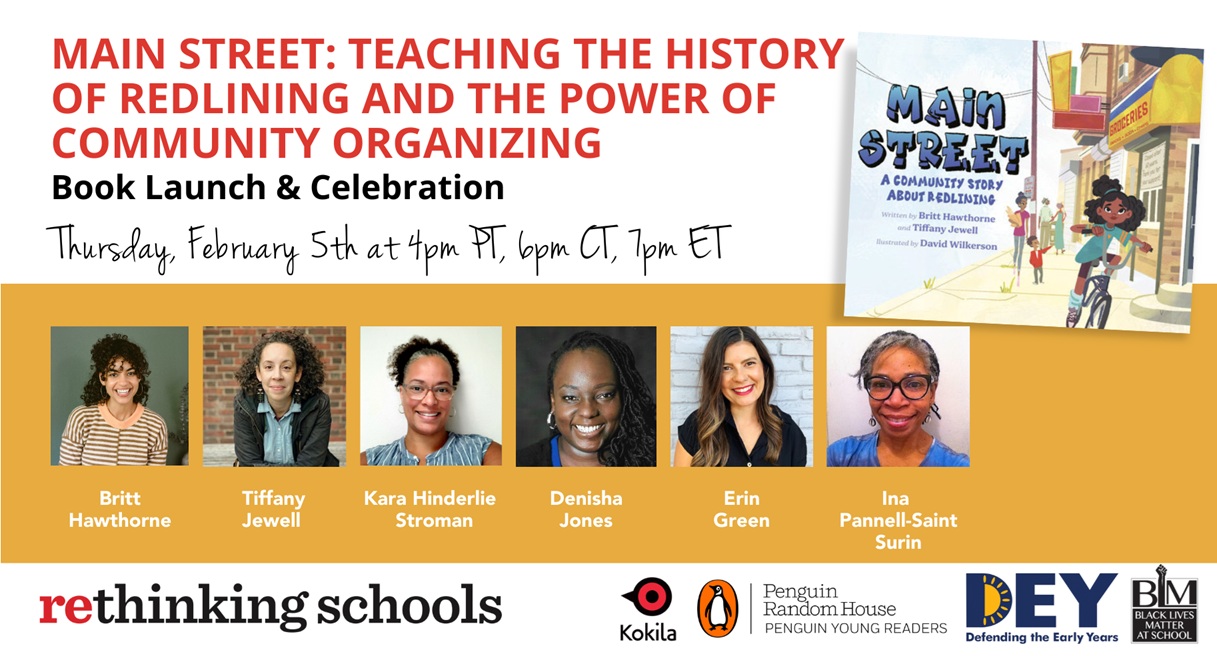
Join a virtual launch and celebration of Main Street: A Community Story About Redlining by Britt Hawthorne and Tiffany Jewell. The webinar, on February 5, will feature a conversation with the authors, followed by a panel of early childhood and elementary educators discussing how to teach young learners about the history of redlining and the power of community organizing. Hosted by Rethinking Schools and more.
The annualNative Knowledge 360° Teach-In, hosted by the Smithsonian’s National Museum of the American Indian in collaboration with Teaching for Change on March 14, is an online opportunity for educators to access classroom resources from NMAI’s Native Knowledge 360° education portal, the Zinn Education Project, and more.
Teachers for Social Justice and Education Workers for Palestine are hosting the 19th Teaching for Social Justice Curriculum Fair in Chicago on March 14. There will be speakers, workshops, curriculum, resources, culture, and food. The curriculum fair theme is Fighting for Our Futures: Teaching for Solidarity and Justice in this Crisis.
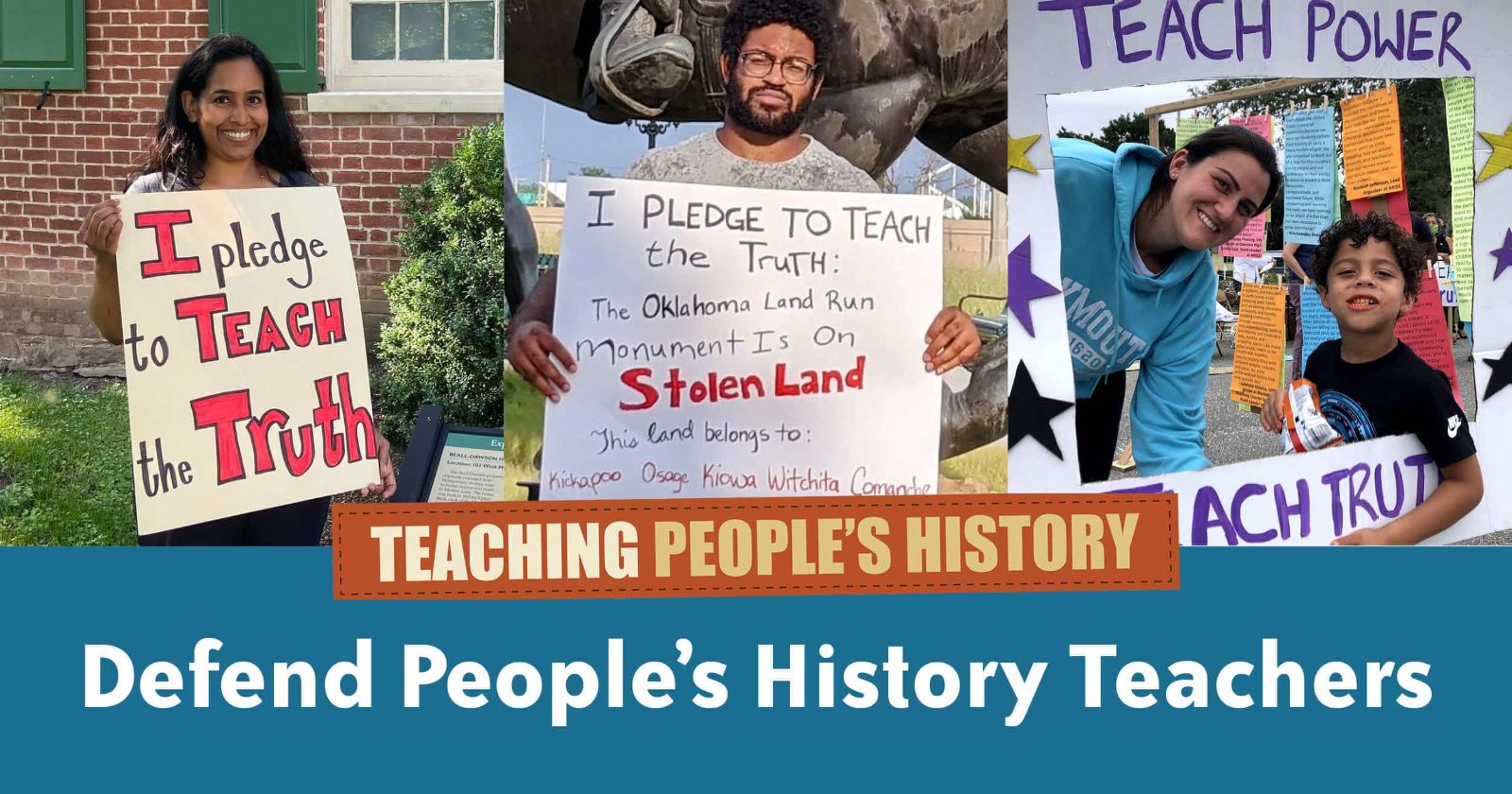
Teachers are under attack for teaching truthfully about U.S. history. Please donate so we can continue to offer free people’s history lessons and resources, and defend teachers’ right to use them.