Black history classes, new Rethinking Schools issue, and more.
If you're having trouble viewing this email, you cansee it online.
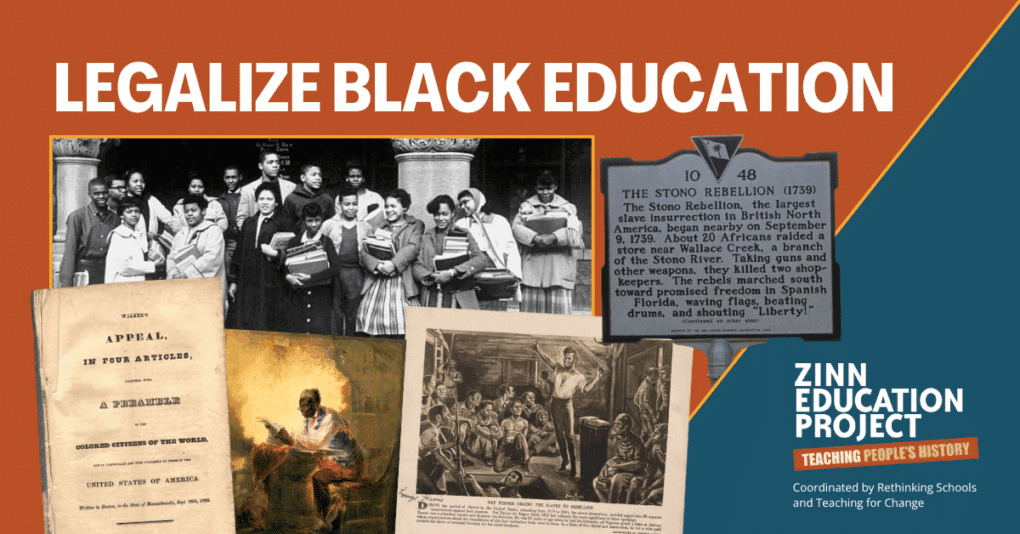
Legalize Black Education: The Long Fight for the Right to Learn by Jesse Hagopian reveals a pattern: When Black people make significant educational gains — or score victories in their broader struggles for freedom — there is a corresponding white supremacist backlash that often includes legal restrictions and violence.
Students explore laws passed to curb Black education in the wake of major victories for the Black Freedom Struggle, highlighting the historical context and motivations behind these legislative efforts. They also discuss quotes about Black education.
We offer this lesson to help young people understand the current backlash. “Legalize Black Education,” and the events listed below, can help prepare for Black Lives Matter at School Week of Action and Black History Month.
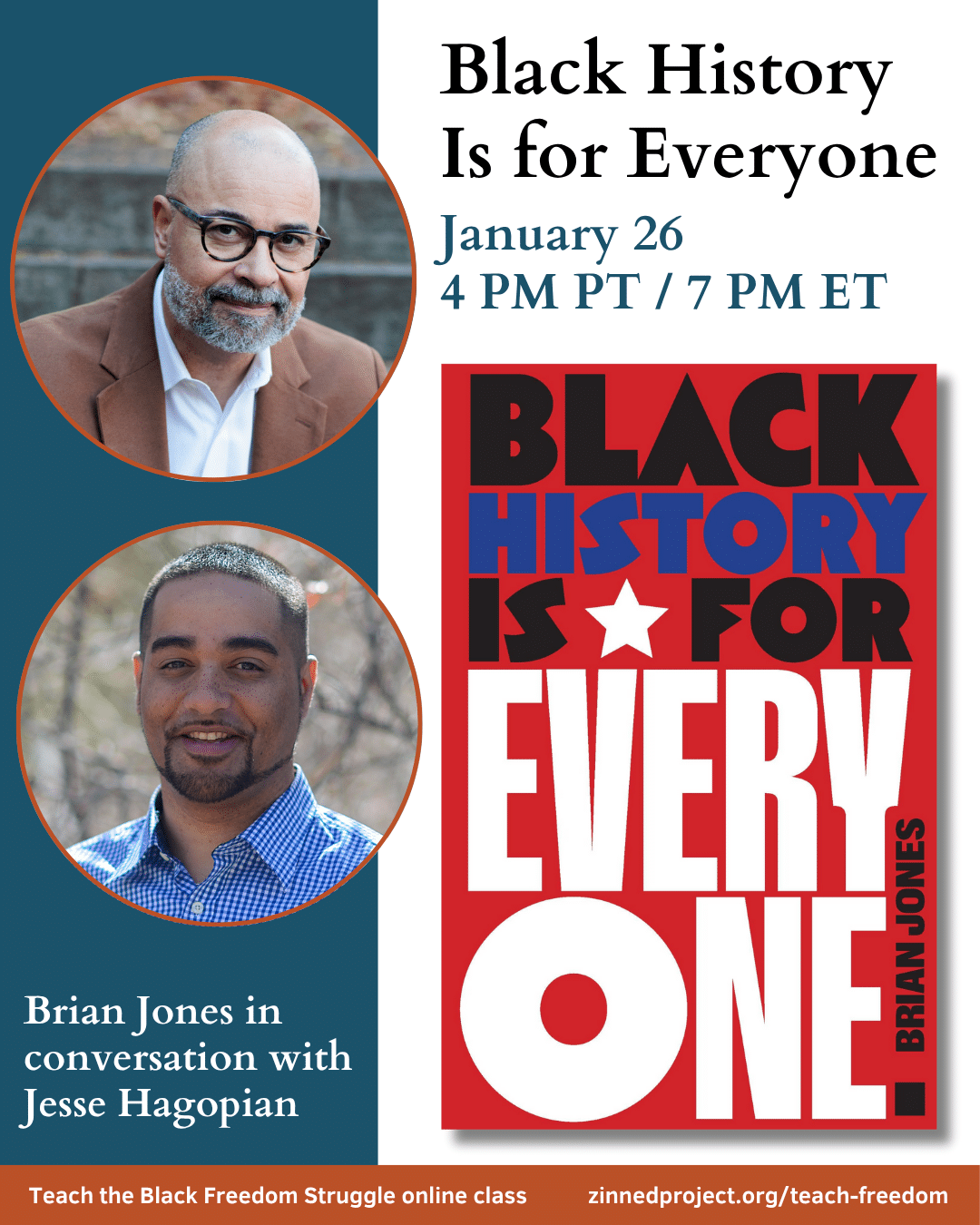
“From Bacon’s Rebellion to the Haitian Revolution, Black History Is for Everyone reveals how those who came before us resisted oppression — and reminds us that study and struggle have always gone hand in hand.” — Ruha Benjamin
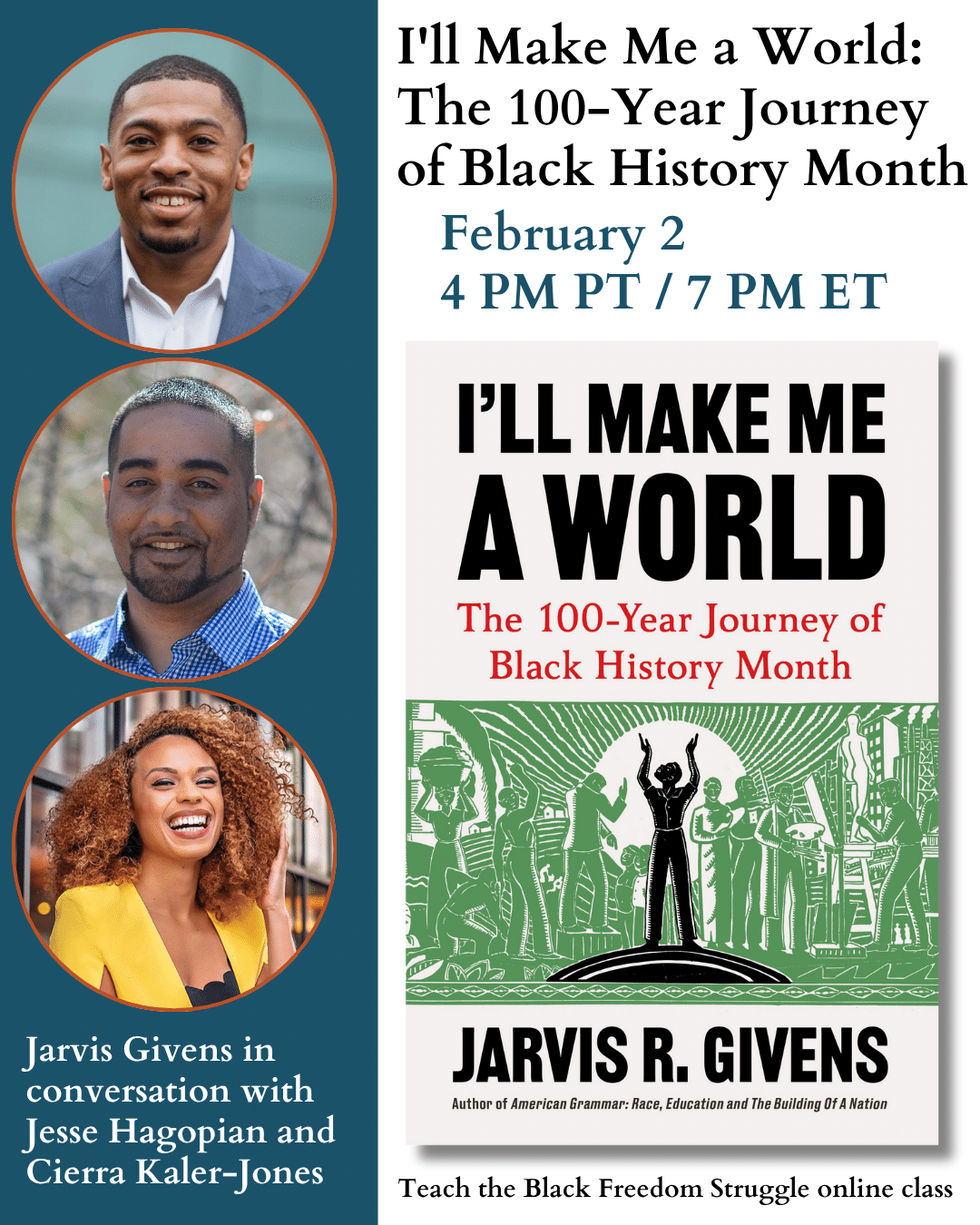
February 2
I’ll Make Me a World is a personal and political journey through the 100-year history of Black History Month — from its radical beginnings in 1926 as “Negro History Week” to its role today in cultural battles.
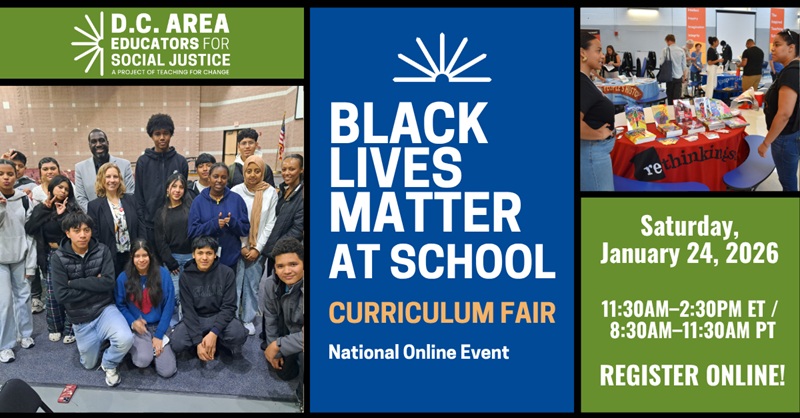
Workshops at the curriculum fair include: “Archives in Class: Teaching with the Emergency Committee on the Transportation Crisis Records” and “Justice in Action: Equipping Students to Reimagine Democracy.”
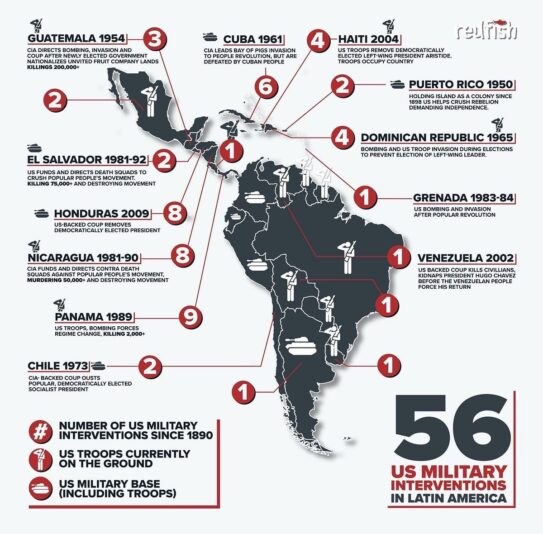
In this new lesson by Jesse Hagopian, students explore competing explanations for U.S. intervention in Venezuela. Rather than presenting a single answer, the activity encourages students to gather evidence, identify contradictions, and assess explanations offered by different actors.
Students better understand the motivations for U.S. interventions in Venezuela when they evaluate claims and think critically about news.
The winter issue of Rethinking Schools includes an editorial plea for “Kicking ICE Out of Our Schools and Communities” and firsthand accounts by teachers about their organizing to keep students safe from immigration enforcement.
The issue also offers a special section on “What’s Wrong with AI in Schools,” a poignant narrative from a transgender teacher engaging with a de-transitioned student, a Cierra Kaler-Jones interview with Mariame Kaba, a narrative lesson from Linda Christensen, and more.
Add these events, hosted by the Zinn Education Project and our colleagues, to your calendar. Online unless noted otherwise.
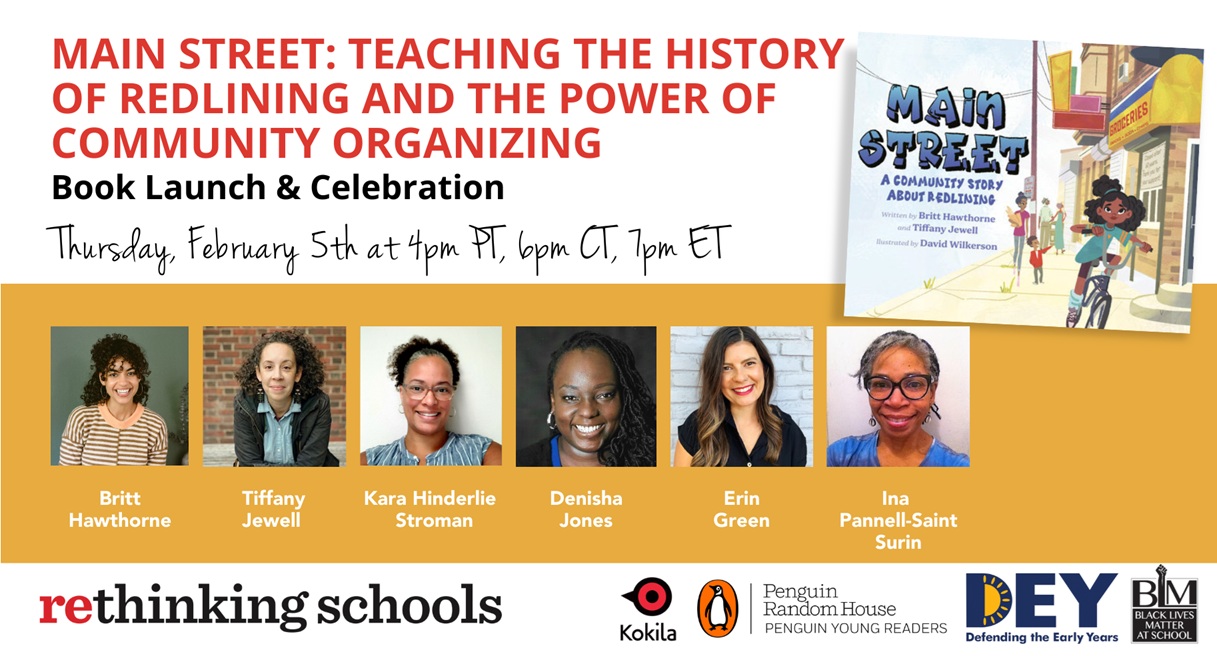
Join a virtual launch and celebration of Main Street: A Community Story About Redlining by Britt Hawthorne and Tiffany Jewell. The webinar, on February 5, features a conversation with the authors, followed by a panel of early childhood and elementary educators discussing how to teach young learners about the history of redlining and the power of community organizing. Hosted by Rethinking Schools and more.
The annualNative Knowledge 360° Teach-In, hosted by the Smithsonian’s National Museum of the American Indian in collaboration with Teaching for Change on March 14, is an online opportunity for educators to access classroom resources from NMAI’s Native Knowledge 360° education portal, the Zinn Education Project, and more.
Teachers for Social Justice and Education Workers for Palestine are hosting the 19th Teaching for Social Justice Curriculum Fair in Chicago on March 14. There will be speakers, workshops, curriculum, resources, culture, and food. The theme is Fighting for Our Futures: Teaching for Solidarity and Justice in this Crisis.
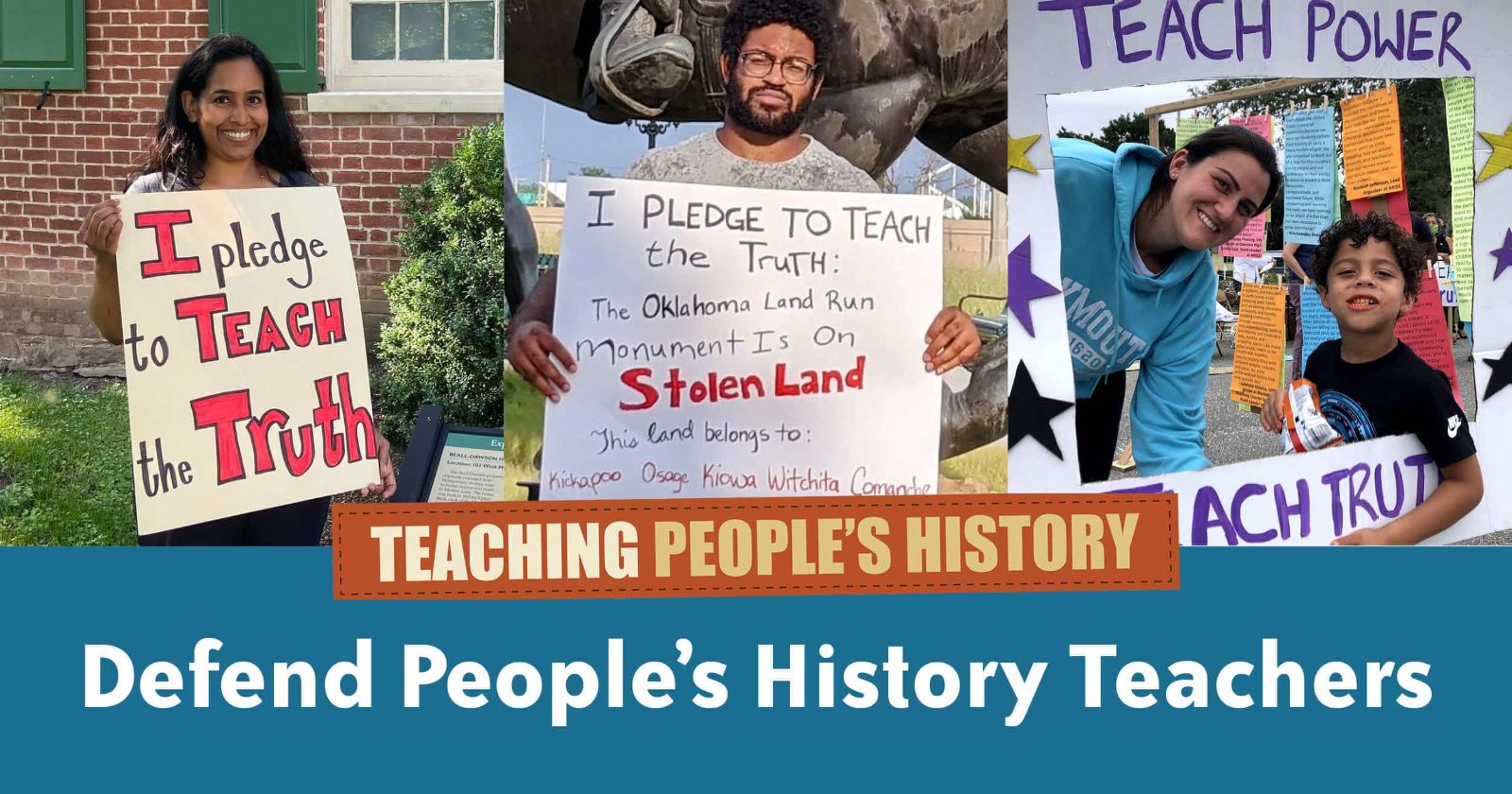
Teachers are under attack for teaching truthfully about U.S. history. Please donate so we can continue to offer free people’s history lessons and resources, and defend teachers’ right to use them.